
What Is Vogalonga? Venice’s Unique Rowing and Kayaking Event
Explore the history, 30-kilometre route, atmosphere and practical tips for paddling the Vogalonga in Venice.
Every year, the Venetian Lagoon becomes the setting for one of Europe’s most memorable events on the water. Vogalonga brings together thousands of people in rowing boats, sea kayaks, canoes and other human-powered craft. It is not about finishing first. It is about celebrating Venice, its waterways and the joy of travelling under your own power.
What is Vogalonga, and why did it begin?
The idea behind Vogalonga emerged in 1974, when Venetian rowing enthusiasts wanted to celebrate traditional boats and draw attention to the damage caused by motorboat waves. The first official Vogalonga took place in May 1975, with hundreds of boats and around 1,500 participants.
The message remains relevant today: Venice’s canals and lagoon are more than transport routes. They are part of the city’s history, culture and fragile environment. Vogalonga is a celebration of human-powered navigation and a reminder of the importance of protecting these waters.

Where does the Vogalonga route go?
The traditional route is approximately 30 kilometres long. It begins in the San Marco Basin, passes through the northern Venetian Lagoon and returns to the city via the Cannaregio Canal and the Grand Canal. The course generally takes participants near Burano and Murano, two of Venice’s best-known islands. Specific details can change between editions, so always check the organiser’s latest course map.

Is Vogalonga a race? No. It is a non-competitive rowing event. There is no need to chase a finishing time, but 30 kilometres on the water still require preparation, endurance and the ability to handle a boat in busy conditions.
For the official current route, participation rules and registration announcements, visit the Vogalonga organiser’s website.
What makes Vogalonga in Venice so special?
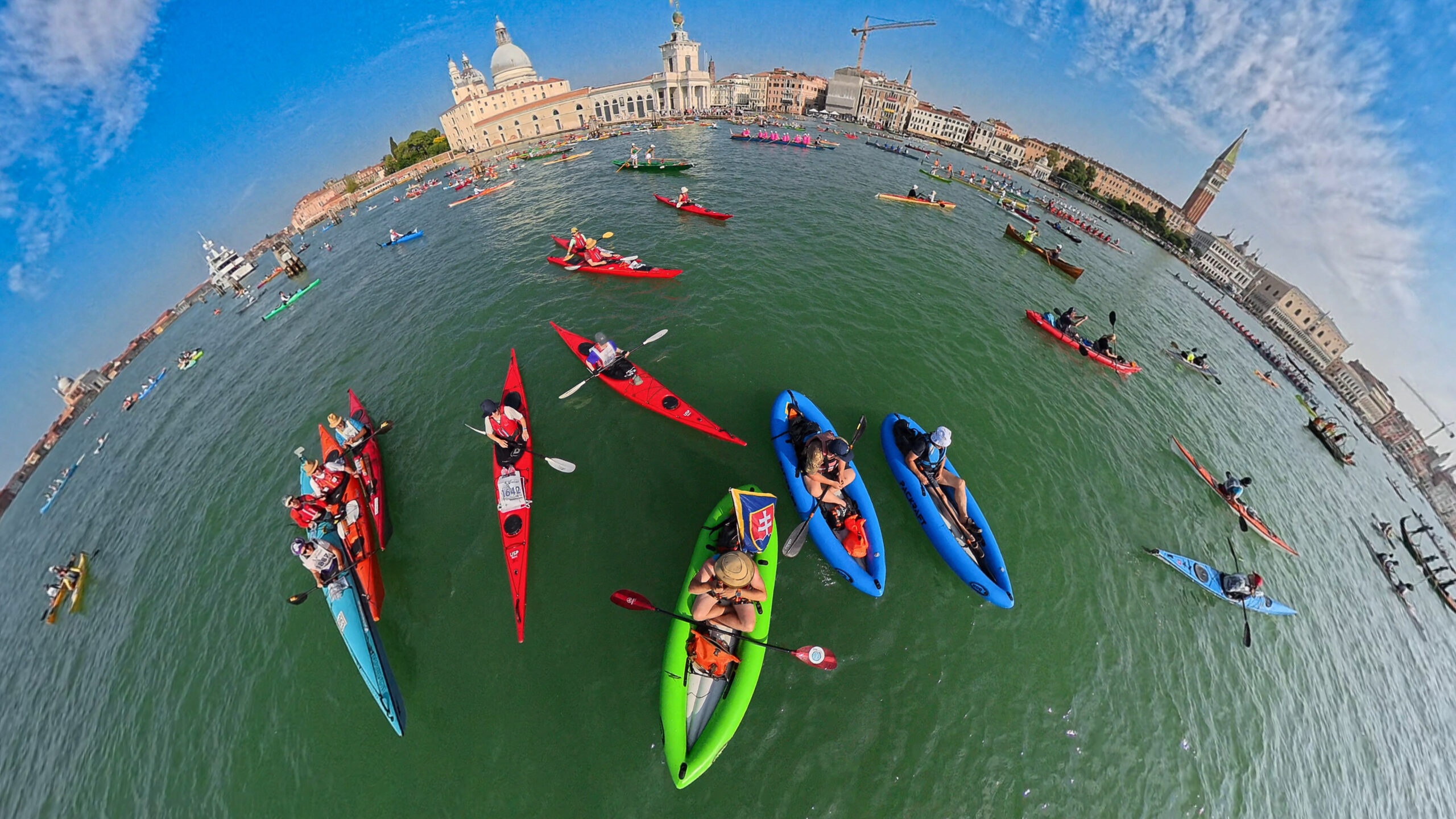
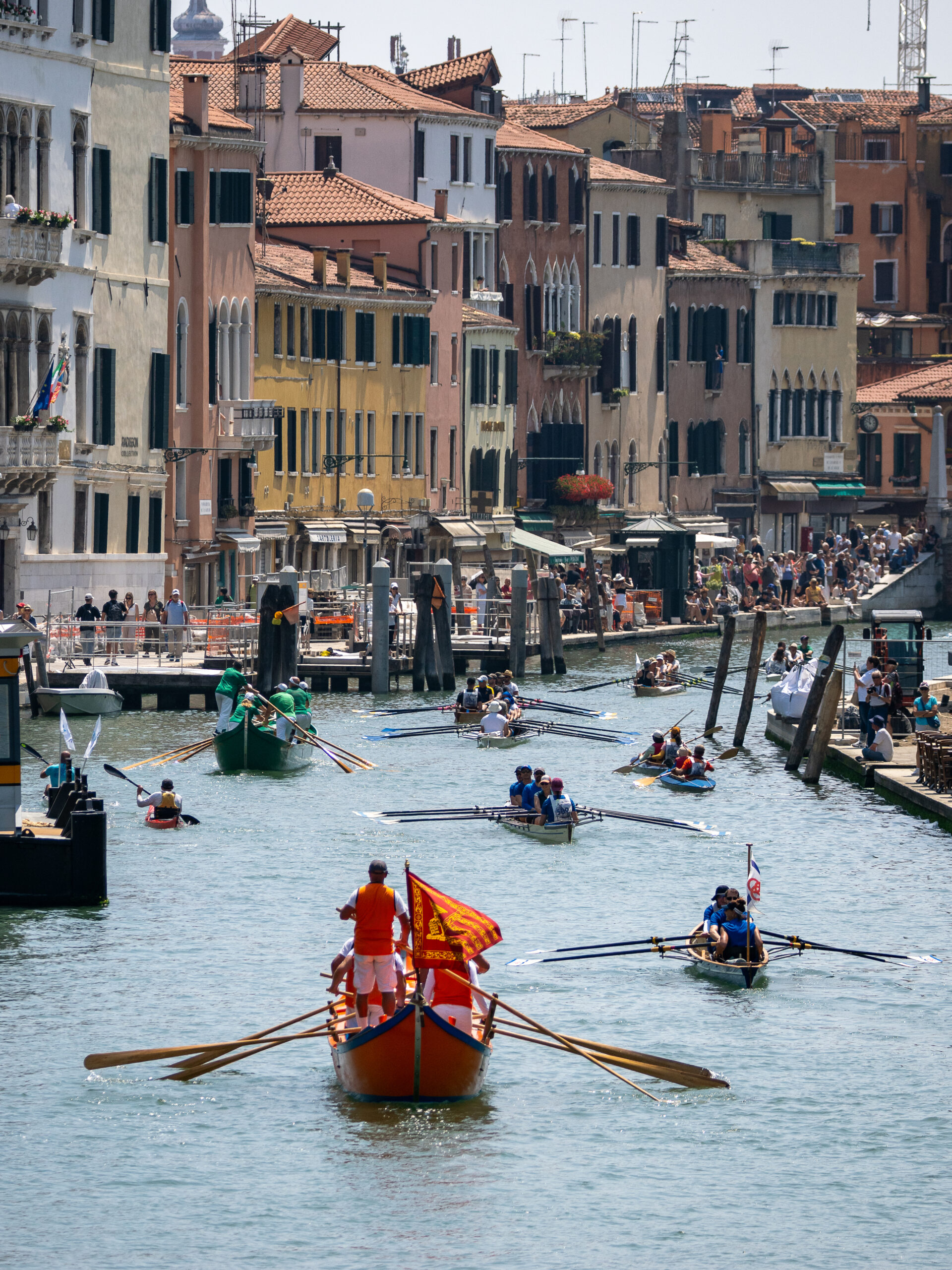
Imagine the San Marco Basin filled with traditional Venetian rowing boats, gondolas, sea kayaks and crews from around the world. The start is busy and exciting. Out in the lagoon, the city opens up into a landscape of islands and wide water. On the way back, familiar Venice landmarks appear from a completely different perspective.
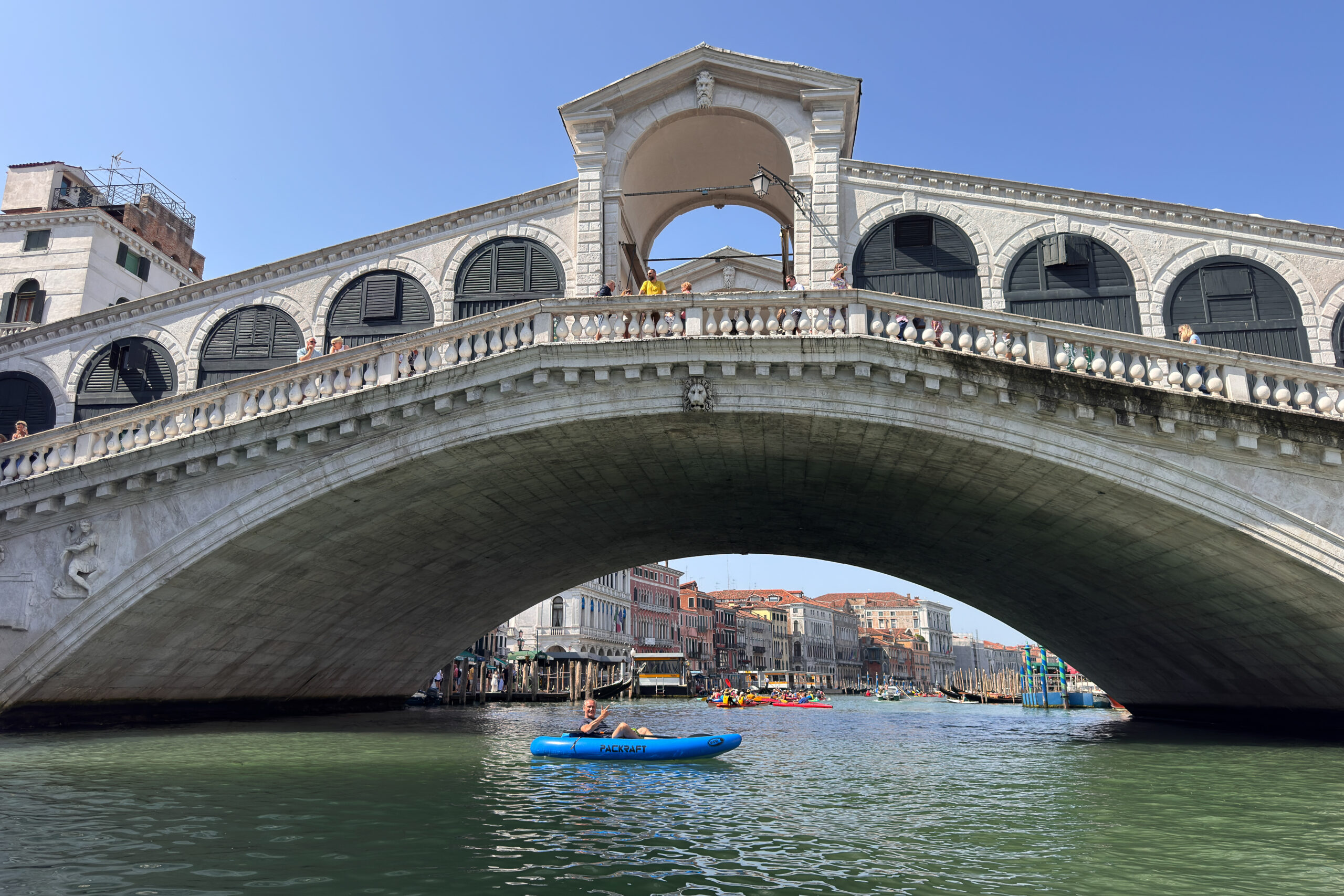
One of the unforgettable moments is entering the historic canals with a huge flotilla of other paddlers. It can be crowded and slow-moving, but that is part of the experience. The final stretch along the Grand Canal, with spectators watching from the bridges and waterfront, is worth the effort.


Can you do Vogalonga in a sea kayak?
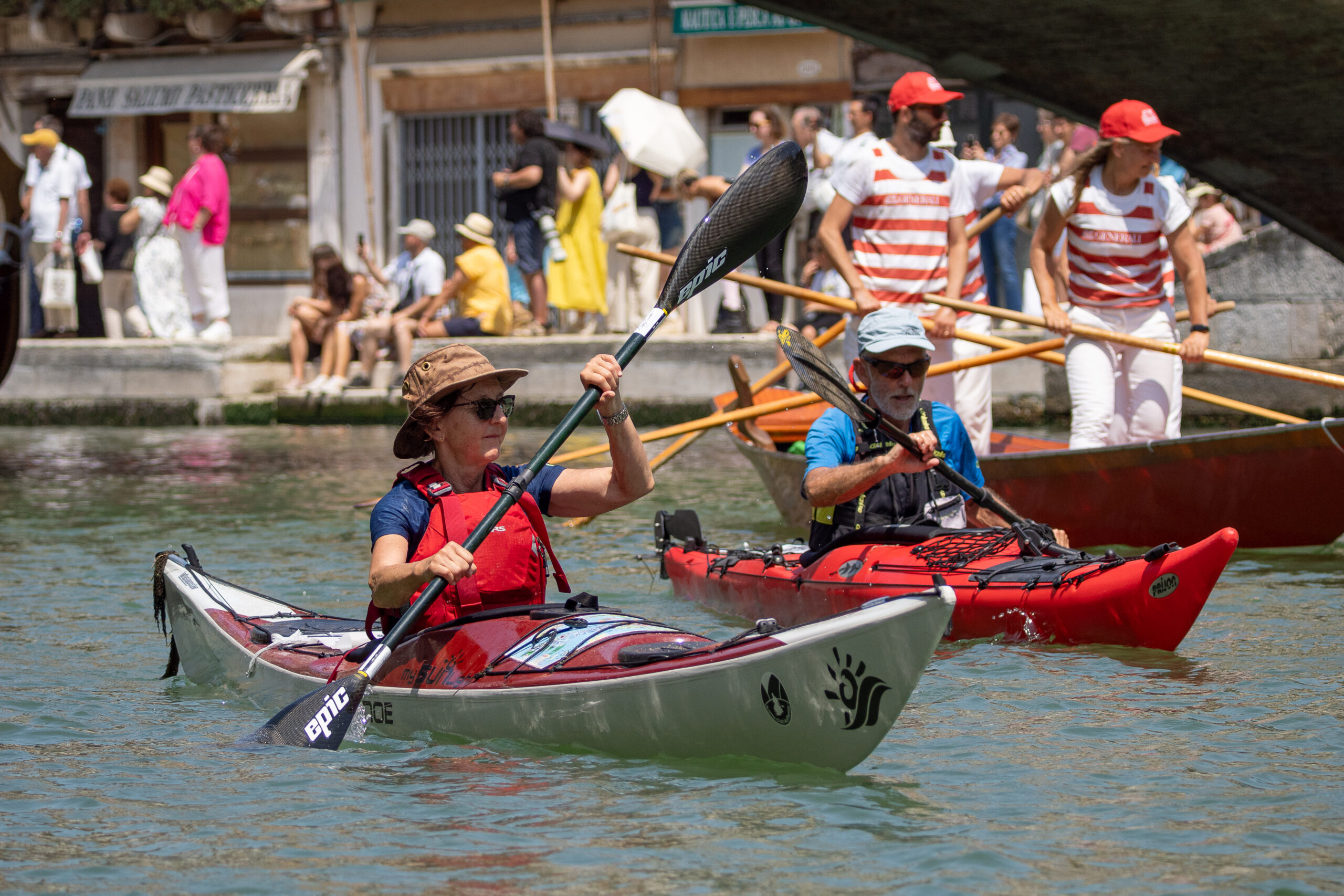
Yes. Sea kayaks are an excellent choice for the Vogalonga route, especially for paddlers who already have experience covering longer distances. A touring or sea kayak moves efficiently across the lagoon and can cope with moderate chop. A stable double sea kayak is a good option for two people who want to share the effort.
Vogalonga welcomes different kinds of human-powered boats, but the best craft is one you can control confidently for several hours. Be prepared for close encounters with other vessels, changing wind conditions and potentially choppy open water.
How difficult is Vogalonga?
The distance is the main challenge. Allow several hours for paddling, breaks and any congestion along the course. The wind can make the return across the lagoon feel harder than the outward journey.
You do not need to be a racing athlete, but it is wise to build up endurance and practise handling your kayak before travelling to Venice.
Where should you launch?
Reaching the official start can involve extra paddling. Popular options include staying around Camping Fusina or finding another suitable launch point in the lagoon.
Remember to account for the distance from your accommodation or launch site to the start – and the paddle back after finishing. Verify local access, navigation restrictions and transport arrangements before your trip.
How much kayaking will you actually do?
Vogalonga’s published course is about 30 kilometres, but that figure rarely equals the full distance you will paddle on the day. You still need to get from your launch site to the gathering point and return afterwards. Depending on where you stay, this can add several kilometres each way.
For example, paddlers staying around Camping Fusina may face roughly 7 km of extra paddling each way, while a launch around Lido can mean around 4 km each way. These are only planning estimates, not guaranteed distances: the actual approach depends on your precise launch point, permitted navigation routes and event arrangements.
Plan beyond the 30 km: factor in time for a slow start, an extended stop near Burano or Murano, canal congestion and the paddle home. It is better to have energy left for the return than to use it all on the main course.
Busy starts, boat traffic and Venetian canals
Vogalonga is friendly, but a large fleet creates its own hazards. Long rowing shells need space to manoeuvre, boats may bunch up in bends and visibility behind a kayak is limited. At a busy turn, try to stay in a less congested line, keep your movements predictable and check behind you before changing course.
The Giudecca Canal deserves particular respect when travelling to or from the event. Large commercial vessels and reflected waves can create confused water, while the high stone banks may offer few safe places to land. Check which routes are permitted and follow local waterway regulations even during the festival.
Venice’s small historic canals are not automatically open to independent kayakers throughout the year. Vogalonga may involve special arrangements, but those do not replace the current rules of the event or the city.
Why the second half can feel longer
It is easy to get carried away with the cheerful procession towards Burano. The waterfront is lively, you naturally fall into rhythm with other crews and the outward leg can pass quickly. After the break, however, the fleet spreads out. The return towards Murano crosses more open water, and both the wind and accumulated fatigue become noticeable.
One simple strategy is to paddle comfortably at the beginning, drink before you feel thirsty and allow time for a short rest if you find a permitted landing place. The final passage through Venice is far more rewarding when you can still enjoy the scenery.
When is Vogalonga held, and how do you register?
Vogalonga is traditionally held in spring, around Pentecost. Exact dates, registration periods, participation fees and route arrangements are announced by the organisers for each edition, so do not rely on details from previous years.
Registration is normally completed online through the official event website. Places may be limited, and popular editions can fill up, so check the organiser’s announcements well in advance.
- Before you go: check the current regulations and official course map.
- On the water: carry suitable safety equipment, drinking water and protection from the sun and wind.
- For logistics: plan boat transport, accommodation and your launch and landing points.
- For navigation: follow the organisers’ instructions and be especially careful in narrow, crowded canals.
Vogalonga FAQ
How long is the Vogalonga?
The traditional route is about 30 km. The total distance you paddle can be longer if you launch away from the official start and finish area.
Is Vogalonga suitable for beginners?
It can be a realistic goal for an active beginner who trains beforehand, but it is not ideal as a first-ever kayak outing. Experience with longer paddles and basic boat handling makes the day much more enjoyable.
Can I participate with a canoe or kayak?
Vogalonga celebrates non-motorised, human-powered craft. Kayaks, canoes and traditional rowing boats are among the types commonly seen. Check the current organiser rules before registering your particular boat.
Do you win a prize?
Vogalonga is about participation rather than rankings. Traditionally, participants who complete it receive a commemorative medal or certificate.
Why paddlers keep coming back
Vogalonga offers something unusual: the chance to see Venice at water level, alongside people who share a love of paddling and traditional boats. Between the colourful lagoon islands, the excitement at the start and the passage along the Grand Canal, it becomes much more than a 30-kilometre outing.
At Vodácke centrum, we have experienced Vogalonga ourselves and are happy to share practical advice with fellow paddlers.
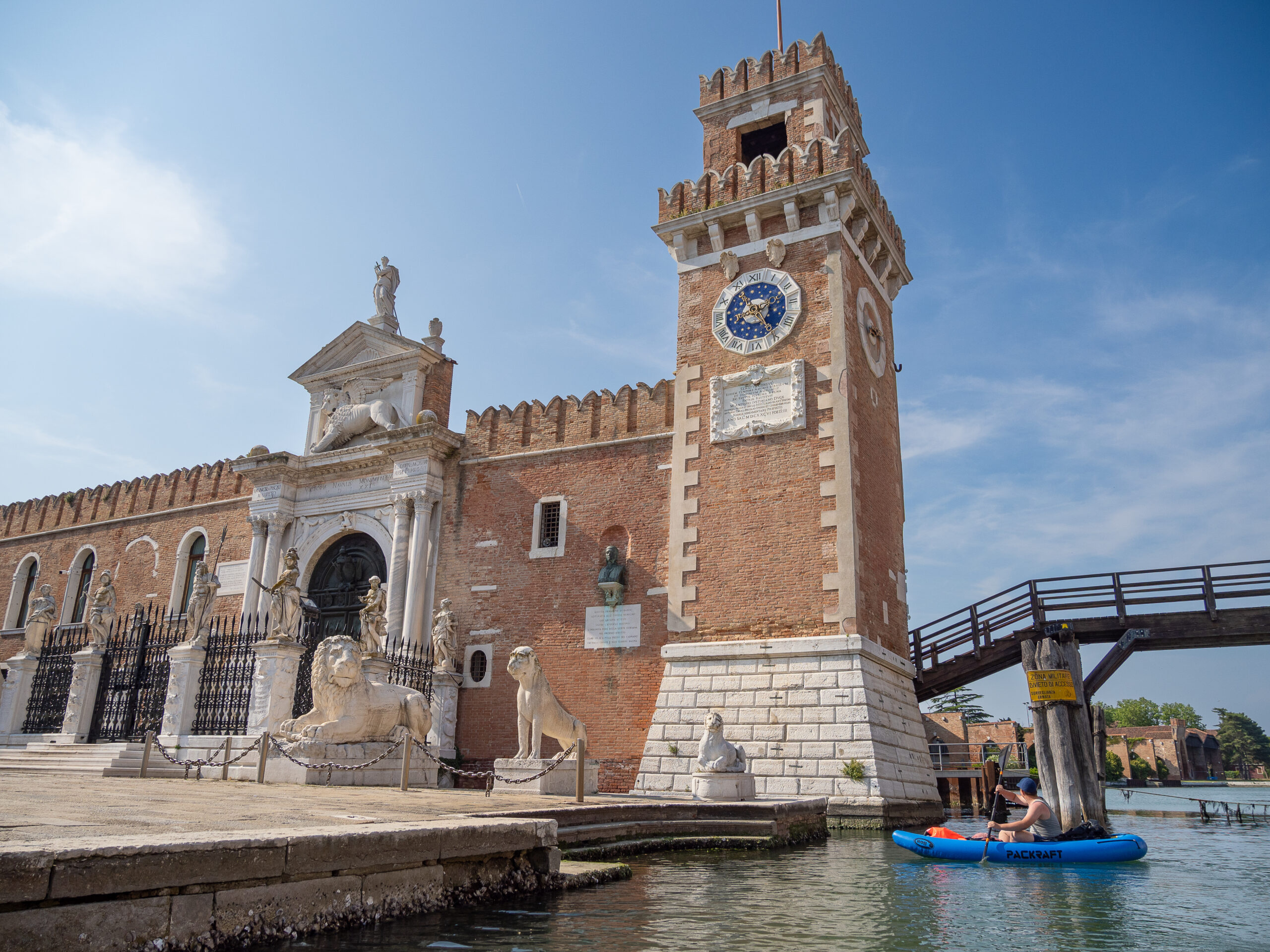
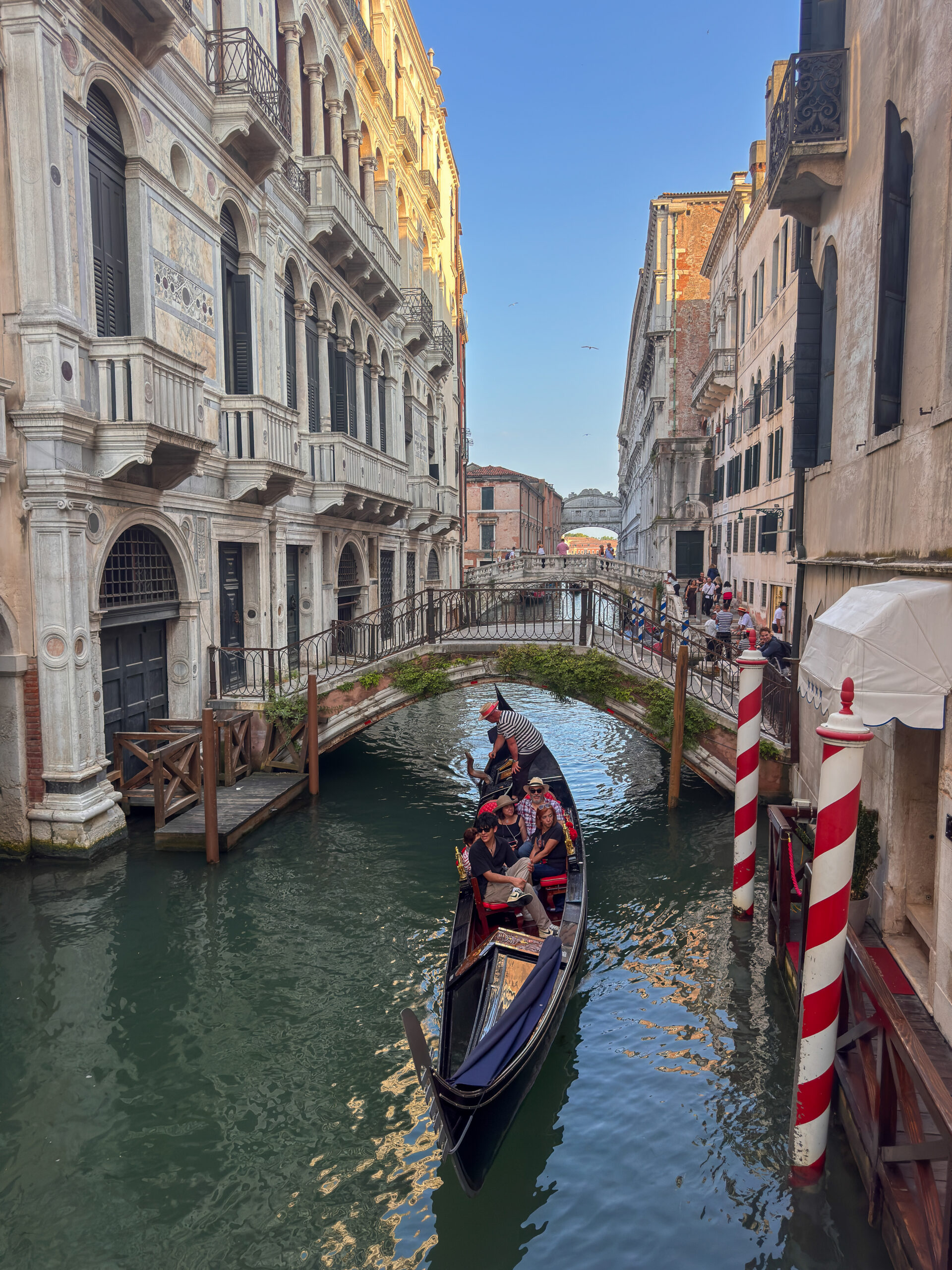
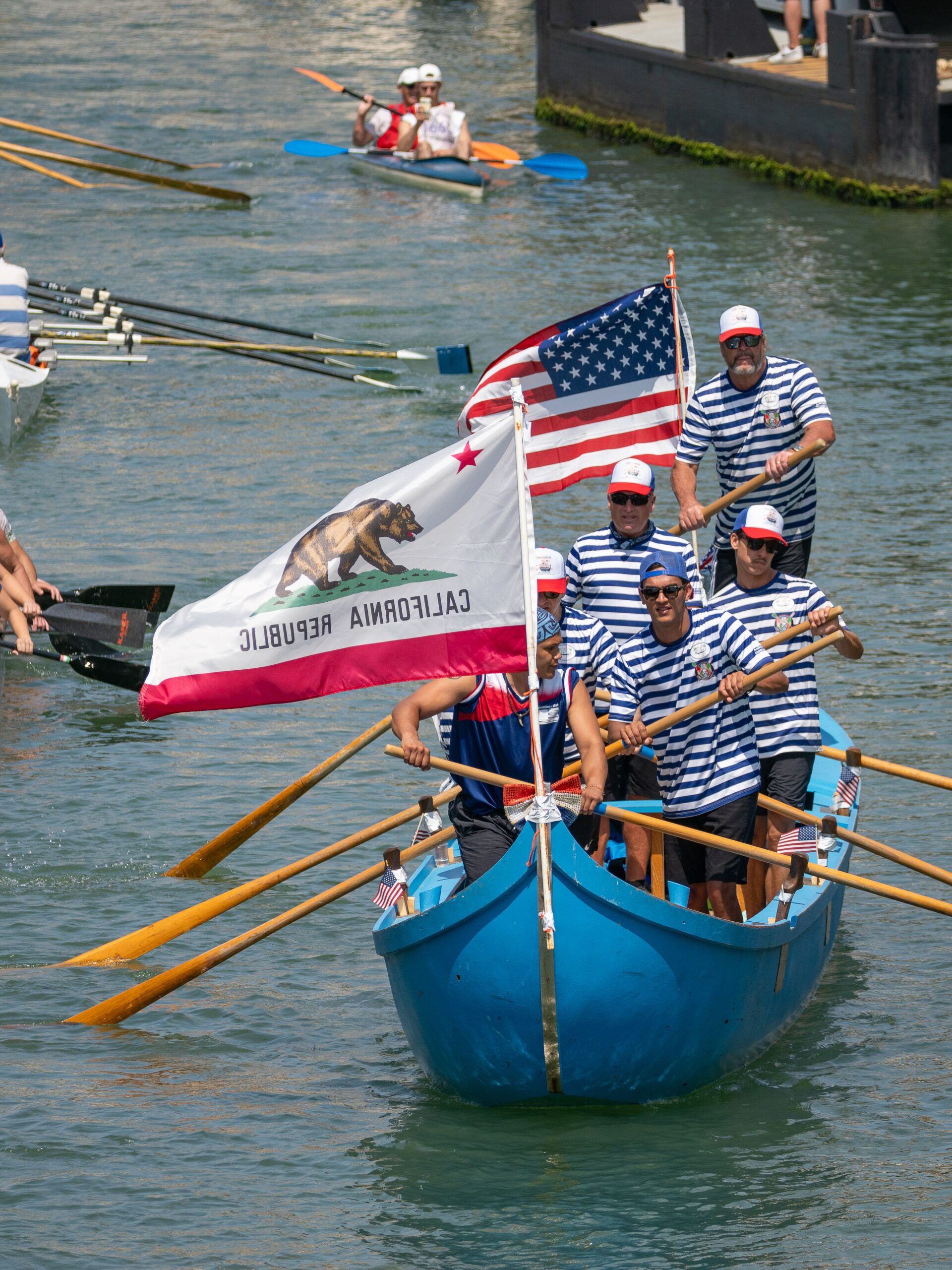
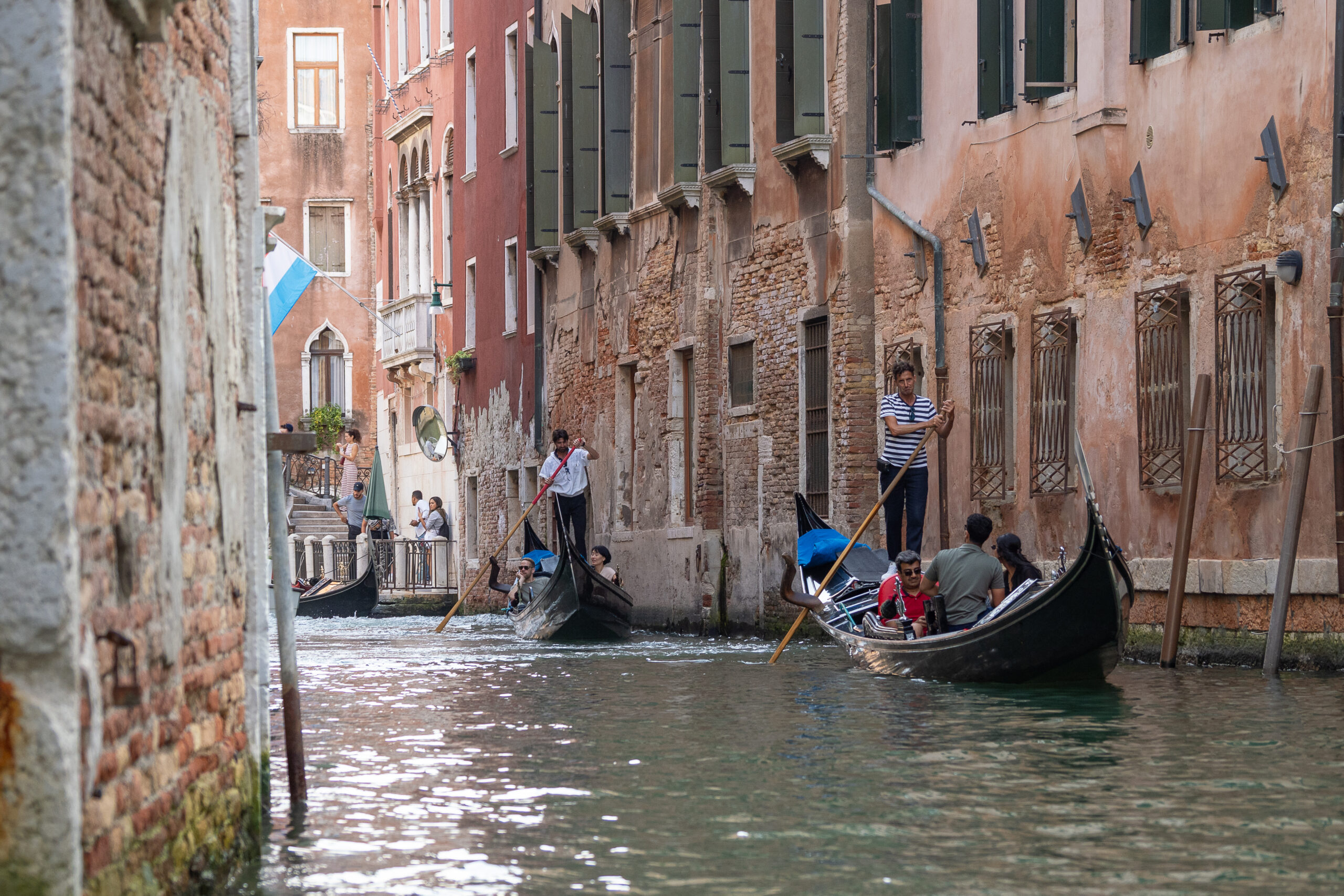
Vogalonga Venice photo gallery
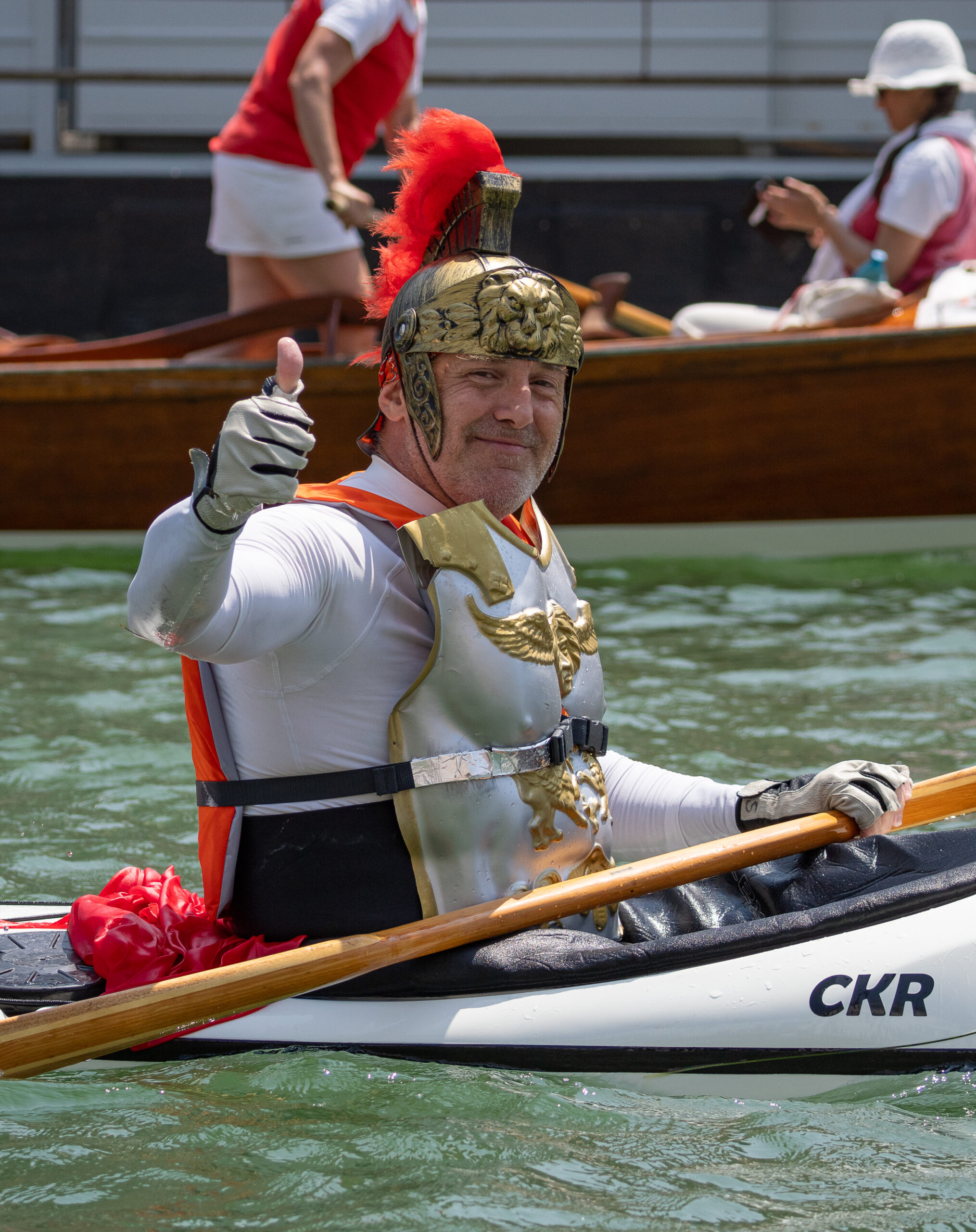
Real photographs from our Vogalonga experiences in Venice. Select a photograph to view it full-size.

Thinking of joining us for Vogalonga?
If you would like to join our group for a future Vogalonga, feel free to send us an email. We will be happy to hear from you.
Email us about Vogalonga